
RESTful & GraphQL APIs
Build powerful, well-documented APIs that enable seamless integration. From RESTful APIs to modern GraphQL implementations, we deliver robust API solutions with comprehensive documentation and testing.
RESTful & GraphQL APIs Excellence
Data Processing, LLC specializes in building robust APIs using Laravel. With over 28 years of experience, we create RESTful and GraphQL APIs that enable seamless integration, provide excellent developer experiences, and scale with your business needs.
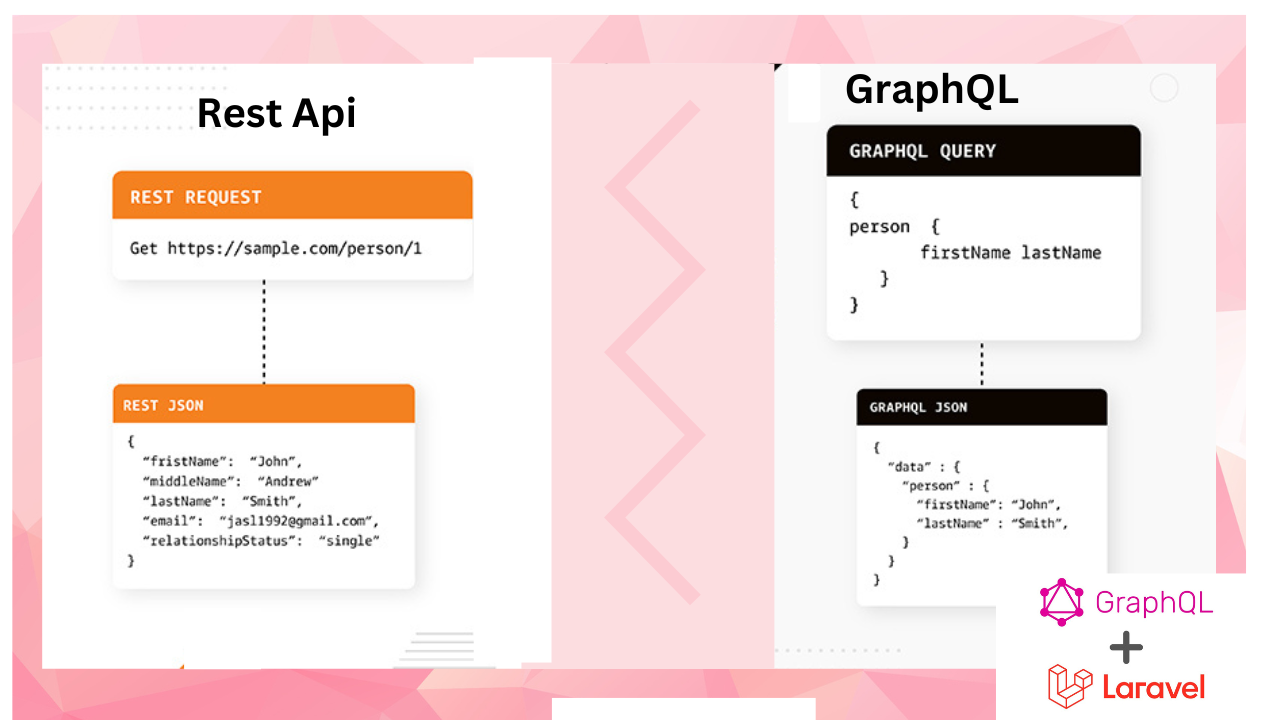
Why Choose Our API Development Services?
Our API development services focus on creating well-designed, secure, and performant APIs that developers love to use. We combine Laravel's powerful features with industry best practices to deliver APIs that are reliable, well-documented, and easy to integrate. Every API is built with security, performance, and developer experience in mind.
Our API Development Services
Comprehensive API development services covering RESTful and GraphQL implementations.
RESTful API Development
- RESTful design principles
- Resource-based routing
- HTTP method optimization
GraphQL API Development
- GraphQL schema design
- Query optimization
- Real-time subscriptions
API Documentation
- Interactive API explorer
- Code samples & examples
- OpenAPI/Swagger specs
Frequently Asked Questions
Common questions about our RESTful and GraphQL API development services.
What is the difference between RESTful and GraphQL APIs?
RESTful APIs use standard HTTP methods (GET, POST, PUT, DELETE) and follow REST principles with resource-based URLs. They're stateless and cache-friendly. GraphQL APIs use a single endpoint and allow clients to request exactly the data they need with a query language. GraphQL is more flexible for complex queries and reduces over-fetching, while REST is simpler and more widely adopted. We help you choose the right approach based on your specific needs, or implement both for different use cases.
How do you ensure API security?
We implement comprehensive API security including: authentication mechanisms (JWT, OAuth 2.0, API keys), rate limiting to prevent abuse, HTTPS encryption for all communications, input validation and sanitization, CORS configuration for cross-origin requests, API versioning to maintain backward compatibility, request/response logging and monitoring, and regular security audits. We follow OWASP API security guidelines and implement defense-in-depth strategies to protect your APIs from common vulnerabilities.
What is included in API documentation?
Our API documentation includes: complete endpoint reference with request/response examples, authentication and authorization guides, data models and schemas, error codes and handling, rate limiting information, code samples in multiple languages (PHP, JavaScript, Python, etc.), interactive API explorer (Swagger/OpenAPI), versioning information, and best practices and guidelines. We use industry-standard tools like Swagger/OpenAPI to generate interactive documentation that developers can test directly.
Can you integrate APIs with existing systems?
Yes, absolutely! We specialize in API integration including: connecting with third-party services (payment gateways, email services, SMS providers), integrating with existing databases and legacy systems, building API gateways for microservices, webhook implementations for real-time updates, API versioning and backward compatibility, and data transformation and mapping. We ensure seamless integration while maintaining security and performance standards.
How do you handle API versioning?
We implement API versioning strategies including: URL-based versioning (/api/v1/, /api/v2/), header-based versioning (Accept: application/vnd.api+json;version=2), semantic versioning for API releases, backward compatibility maintenance, deprecation policies with clear timelines, version migration guides, and automated testing across versions. We help you plan versioning strategies that minimize disruption to existing clients while allowing for API evolution.
What testing do you perform on APIs?
We conduct comprehensive API testing including: unit tests for individual endpoints, integration tests for API workflows, performance and load testing, security testing (penetration testing, vulnerability scanning), contract testing to ensure API contracts are met, automated API testing in CI/CD pipelines, and documentation testing to ensure examples work correctly. We use tools like PHPUnit, Postman, and automated testing frameworks to ensure API reliability.
How do you optimize API performance?
We optimize API performance through: efficient database queries with proper indexing, response caching strategies (Redis, Memcached), pagination for large datasets, data compression (gzip), connection pooling, query optimization and N+1 problem prevention, CDN integration for static resources, and API response time monitoring. We aim for sub-200ms response times for most endpoints and implement caching strategies that reduce database load significantly.
Do you provide API monitoring and analytics?
Yes, we provide comprehensive API monitoring including: real-time performance metrics (response times, error rates), usage analytics and traffic patterns, endpoint-specific monitoring, error tracking and alerting, rate limit monitoring, API health checks and uptime monitoring, and custom dashboards for API metrics. We set up monitoring systems that alert you immediately when issues occur, helping maintain high API availability and performance.
Can you build both RESTful and GraphQL APIs for the same project?
Yes, we can implement both RESTful and GraphQL APIs for the same backend. This hybrid approach allows different clients to use the API style that best fits their needs. For example, mobile apps might prefer GraphQL for flexible queries, while web applications might use RESTful endpoints. We design the backend architecture to support both, sharing business logic and data models while providing different API interfaces. This approach maximizes flexibility and developer experience.
Ready to Build Your API?
Contact us today for a consultation and let's discuss how we can build powerful RESTful or GraphQL APIs that enable seamless integration for your applications.